The world is changing, and we should be ready to change
with it. Inside today’s school system and classroom, we encounter students of
different gender, race, religion, sexual orientation, physical, mental, and social
abilities, and socio-economical status. When these children come to school, we
as teachers should ensure they feel welcome and loved. As a result, we should
provide all the necessary resources for them to achieve their full potential.
One way to do this is by providing them with the books that they can read and relate
to. These books should act as mirrors and window. They should be able to identify
themselves in the books and then use the book as an avenue to achieve his/her desired
goal and not thinking about what society might say or think. As stated by
Kiefer & Tyson, (2014), exploring controversial issues helps children
develop a comprehensive, more critical understanding of the world they live in
and is an important part of helping them become critical reflective thinkers (p.21).
Children should not feel ashamed or ridicule because they are different. Hall, (2008)
& Levin, (2007) further states that books children read can help them develop
and positive self-identity. When children recognize that their teacher cares
and respect them without thinking or looking at their life, they can develop a trusting
relationship. More so, when they can relate themselves to stories and make some
form of connection is very fulfilling. If we are to effectively prepare our
learners for the future, we must factor in the topic of diversity. The
classroom and school libraries must be diverse enough with books from different
genres that child appropriate.
There are some topics that are hard to teach or discuss
with children. However, Taylor, (2003), asserts that Children’s books are
powerful learning tools for helping young children understand discrimination. One
of the best ways to teach “difficult topics” is to have a read aloud activity. The third
grade EL curriculum demonstrated a great teaching/learning activity with the
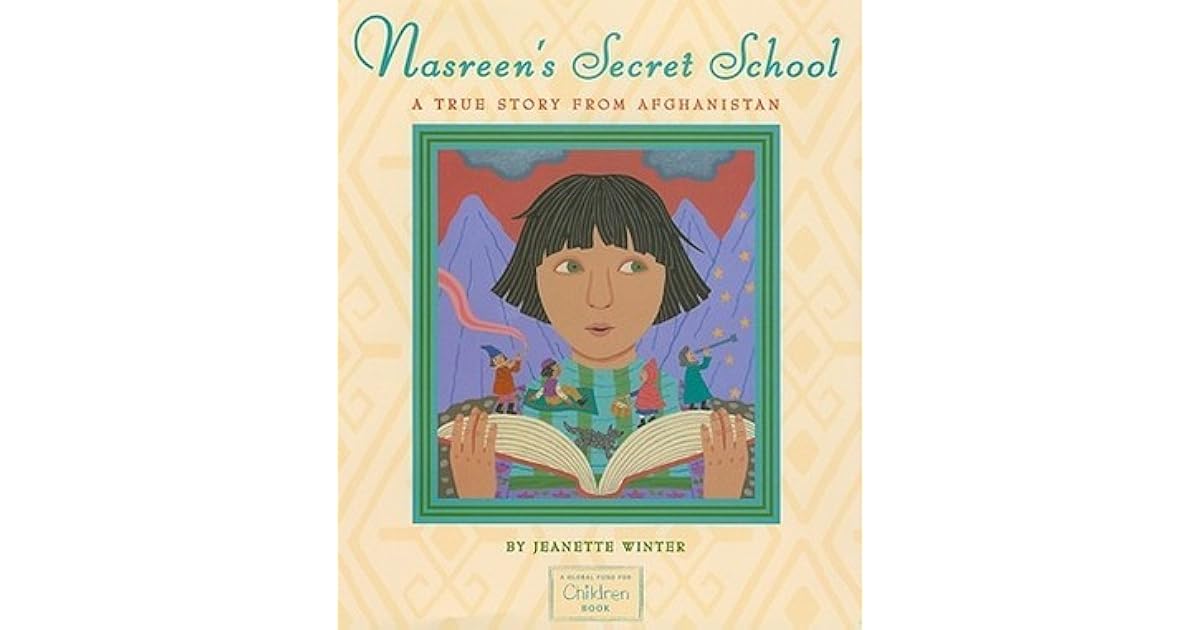
text of “Nasreen’s Secret School” written by Jeanette Winter, (2009). The story
gave a vivid example of how girls in Afghanistan were discriminated from getting
a proper education. As a result of this, girls were forbidden to attend school
and were to stay home to help in the house with their mother. However, there
was a secret school for girls to attend which allowed Nasreen to get a proper education.
This story shows that even if you are being discriminated there is always hope.
During this read aloud, I kept my thoughts to myself and pulled from my student’s
knowledge during the discussion. I wanted them to share and discuss amongst themselves
as it relates to gender discrimination. At the end of the read aloud, I said to
them that these are issues that are still happening within today’s society. To
wrap up the read aloud, I told them to put themselves into Nasreen’s shoes and
write a paragraph explaining what they would have done if they were experiencing
gender discrimination.
Sources:
Hall, K.W. (2008).
Reflecting on our read-aloud practices: The importance of including culturally authentic literature. Young Children, 63(1), 80–86.
Kiefer, B. & Tyson, C. (2014). Charlotte
Huck’s Children’s Literature. A Brief Guide. 2nd edition. The McGraw-Hill
Company, Inc. New York.
Koss, M., (2015). Diversity in contemporary
picture books: a content analysis. Journal
of children’s literature, v41 n1 p32-42 Spr 2015.
Levin, F. (2007).
Encouraging ethical respect through multicultural literature. The Reading
Teacher, 61(1), 101–104
Taylor, F. (2003).
Content analysis and gender stereotypes in children’s books. Teaching Sociology, 31(3), 300–311.
Winter, J. (2009).
Nasreen’s Secret School. Beach Lane Books. San Diego.
Common Core Standards:
CCSS.ELA-LITERACY.RL.3.2
Recount stories, including fables, folktales, and myths from diverse cultures; determine the central message, lesson, or moral and explain how it is conveyed through key details in the text.
CCSS.ELA-LITERACY.RL.3.3
Describe characters in a story (e.g., their traits, motivations, or feelings) and explain how their actions contribute to the sequence of events

No comments:
Post a Comment