Wednesday, July 25, 2018

Rescue & Jessica


Rescue & Jessica: A Life-Changing Friendship
By Jessica Kensky + Patrick Downes
Illustrated by Scott Magoon

Informational Text Book Talk - Kimberly Paris

Friday, July 20, 2018

Sea Otter Heroes

Sea Otter Heroes: The Predators that Saved an Ecosystem by Patricia Newman


A Robert Sibert Honor Award Winning book about the mystery of the healthy Elkhorn Slough by Patricia Newman.  Other award-winning informational texts by Newman to check out are Ebola: Fears and Facts, Plastic Ahoy! Investigating the Great Pacific Garbage Patch, and Nugget on the Flight Deck.

Informational Text Talk: Seymour Simon's EXTREME EARTH RECORDS

https://youtu.be/diuVBK3IN9c

Informational Talk - Locomotive

https://www.youtube.com/watch?v=jjFwwlEsQ6U&feature=youtu.be

Informational Book Talk- Hidden Figures: The Story of Four Black Women and the Space Race


Informational Book Talk: Finding Winnie by Lindsay Mattick


https://www.youtube.com/watch?v=YjyBhzd_Ui4&feature=youtu.be

Book Talk: Sonia Sotomayor: a judge grows in the Bronx

Hi everyone! This is my book talk on Sonia Sotomayor: a judge grows in the Bronx written by Jonah Winter and illustrated by Edel Rodriguez.


Winter, J., & Rodriguez, E. (2009). Sonia Sotomayor: A judge grows in the Bronx = Sonia Sotomayor: La juez que creció en el Bronx. New York: Atheneum Books for Young Readers.

Thanks! 
Katie 

Thursday, July 19, 2018

Informational Text Book Talk: Just Being Jackie


Just Being Jackie
 By: Margaret Cardillo 
Illustrated By: Julia Denos 


Wednesday, July 18, 2018

Informational Text Book Talk: Giant Squid by Candace Fleming and Eric Rohman Video by Bridgette Fagala


Informational Book Talk: Bomb by Steve Sheinkin


Check out my informational book talk on Bomb: The Race to Build and Steal the World's Most Dangerous Weapon by Steve Sheinkin. Even though I was trying to read it as if I was a child examining an informational text, I found myself engaging in it in the way I read as an adult- it was just that good! But don't take my word for it...it totally ticks almost all of the boxes from Kiefer and Tyson's nonfiction evaluation guide and it received a Newbery Honor in 2013. 

Sheinkin, Steve. Bomb: The Race to Build and Steal the World's Most Dangerous Weapon. Roaring Brook Press, 2012.

Sunday, July 15, 2018

Dinosaurs Divorce: A Guide for Changing Families

Children’s books are great ways to help kids and young adults deal with and confront issues in their lives that may be controversial, confusing, or hurtful. Often when dealing with issues such as these, children are left to sort them out on their own or they aren’t explained until they’ve already left a sense of loss and confusion. As teachers, we are given an opportunity to tackle some of these issues and help these kids to make sense of the complicated world in which they live. Issues like death, depression, violence, race, sexism, and other tough topics can be addressed through sit downs with parents and teachers that can be aided through literature that helps spark and guide such conversations. 
Often when kids experience trauma they have trouble expressing themselves and what they’re feeling. Some psychologists and teachers are using the Pixar movie “Inside Out” to help kids begin to talk about their emotions. In the movie, the viewers are taken inside Riley’s brain, a 9-year-old girl who is moving to a new city. Each of her emotions are personified into characters named Joy, Sadness, Disgust, Anger, and Fear. Dacher Keltner, a founding faculty director of UC Berkley’s Greater Good Science Center, served as a consultant for the film ensuring that the message was based in scientific research. (Marsh, 2015) Kids are asked to use the names of the characters to describe the emotions they’re feeling and better communicate their needs with the adults in their lives. 
Dinosaur Divorce: A Guide for Changing Families was written in 1986 by Laurene Krasny Brown and Marc Brown. (Brown, 2009) The book is part of a series by the pair called the Dino Life Guides for Families that tackle other issues in books titled When Dinosaurs Die: A Guide to Understanding Death, How to be a Friend: A Guide to Making Friends and Keeping Them, Dinosaurs Alive and Well!: A Guide to Good Health, Dinosaurs, Beware! A SafetyGuide and other stories about traveling and protecting the planet. These books are appropriate for preschool through second grade students and use language that is easily understood by younger students. Dinosaur Divorce starts off with a dictionary of words that are relevant to kids experiencing divorce in their family such as custody, lawyer, child support, and others. As a child of divorce myself, I recognize that this book addresses a lot of the fears I had as a child like if the divorce was my fault, where would I live, how would I deal with holidays, and other questions. I can imagine the impact it could have on a kid who was struggling when they feel like their family is falling apart. 
According to the National Center for Health Statistics, in 2017, our of the 2,245,404 marriages, 827,261 ended in divorce, meaning 36% of marriages ended in divorce. (NCHS, 2017) Its an issue that affects many kids all over the country and can be traumatizing for our students. Family trauma affects the social and academic performance of students of all ages. Stories such as Dinosaur Divorce are relevant and important to support our students as they experience difficult, life changing events. 

References: 
Brown, L. K., & Brown, M. T. (2009). Dinosaurs Divorce: A guide for changing families. New York:    Little, Brown and Company Books for Young Readers.

Marsh, J., & Zakrzewski, V. (2015, July 14). Four Lessons from "Inside Out" to Discuss with Kids. Retrieved from https://greatergood.berkeley.edu/article/item/four_lessons_from_inside_out_to_discuss_with_kids

National Center for Health Statistics. (2017, March 17). Retrieved from https://www.cdc.gov/nchs/fastats/marriage-divorce.htm
Diversity

Teaching acceptance of diversity is something that I am very passionate about. In our society there are so many different types of people that teaching children acceptance of all individuals is a must. Even though as educators we understand the need and importance of building relationships with children of diverse backgrounds it can be hard to find books that address students of color in our classroom.  Not using books with main characters or authors of color can be  harmful to students and "may send the negative message to children of color that their teachers do not recognize or feel comfortable acknowledging a salient and influential part of their identity: their race." (Wanless, 2016) 

 For this blog post I chose to share a book with you that has a child of color as the main character, Amazing Grace by Mary Hoffman.


Amazing Grace by Mary Hoffman is a story about a young girl Grace that wanted to play Peter Pan in the school play. When she raised her hand to volunteer for the part the children said she could not play Peter Pan because she was a girl and because she was black. Grace went on to audition for Peter Pan and did such a great job that all of her classmates voted for her. Grace won the role as Peter Pan and the show was a hit.

I love this book for many reasons. The most important reason that I use this book in my classroom is because it has a main character that is not white. "Children of color make up more than half of the children in the United States." (Struass, 2014) If more than half of the students that we are teaching are not white, the books that we share with them should include characters that are not white. Too often children of color have books that show them the lives of mostly white,  middle and upper class families. These books are not relatable to students of color. The article How Common Core's Recommended Books fail children of color states that good readers make connections to themselves and their communities and that as a part of identity development children must see authors and characters like themselves. Children need to read stories with characters that look like them and have the same experiences as them in order to grow as readers and a humans. By exposing children to good literature at an early age with characters and authors of different races we can positively impact children;s acceptance of their own race as well as others.

If you want to research this topic any further I have added some websites below.

http://journals.sagepub.com/doi/abs/10.3102/00028312032003493 
http://journals.sagepub.com/doi/abs/10.1177/0022487101052002002 
http://journals.sagepub.com/doi/abs/10.1177/016235320302700203 


Articles Cited
Valerie Strauss,  How Common Core's Recommended Books Fail Children of Color. The Washington Post, September 2014.
Shannon B. Wallace, Patricia A. Crawford. Young Children May 2016 Vol. 71, No. 2.


Diversity in the Classroom

"Wouldn't it be terrible?  Wouldn't it be sad?  If just one single color was all the color we had?  If everything was purple?  Or red?  Or blue?  Or green?  If yellow, pink, or orange was all that could be seen?  Can you just imagine how dull world would be if just one single color was all we got to see?"

     This poem was inspired by the picturebook, The Crayon Box That Talked by Shane Derolf (pictured below).  Soon after beginning a new school year, my first graders will be engaged in this read-aloud.  They absolutely love it!  The analogy about the crayon colors relates so well to our modern day diverse classrooms.  Gone are the days where classrooms were comprised of only white and black American students.  Today, many cultures are represented in classrooms and in order to build the "classroom community", which is so important to the everyday learning process, we must develop an appreciation of these represented cultures.  In her article, "The Importance of Building Community in the Classroom", Amy McKinney tells us "that when we take the time to get to know our students on a personal level, and are culturally responsive, we let them know that we genuinely care about them".  When this appreciation of all students occurs, the academic learning process will be much more productive.

     In the Wake County Public School System, the first grade Social Studies curriculum addresses a unit on "Our Community Celebrates".  Standards 1.C.1.1 and 1.C.1.2 address this diversity by "comparing languages, traditions, holidays, etc. of various cultures and using literature to help people understand diverse cultures".  In my classroom, we plot the represented classroom cultures on a world map (pictured below) and have a time of sharing by these students.  My goal is to take this a step further and strengthen the home-school connection by having a "mini-culture fair" where parents would be invited for participation in the event.  This involvement would support Kiefer & Tyson's step 9 in the Ten Point Model for Teaching Controversial Issues, "Let others-parents...know what you are doing".

     Developing this understanding of other cultures will "foster creativity, critical thinking, and problem-solving skills" and will prepare students for success in living and working harmoniously with people who are different from them...and, that is the goal!

-Connie Thorne


Kiefer, B. and Tyson, C.  (2014).  Charlotte Huck's Children's Literature A Brief Guide
     (2nd edition).  22.  New York, NY:  McGraw Hill
Lee, G.  (2018, February).  Benefits of Racial Diversity in the Classroom
     Retrieved from https://www.thinkinclusive.us
McKinney, A.  (2017, August).  The Importance of Building Community in the Classroom
     Retrieved from https://www.teachervision.com


Issues and Identity Blog Post: Children with Disabilities

Educating students about children with disabilities is something that I am passionate about and think is very important in elementary schools.  According to the National Center for Education Statistics (NCES), "In 2015–16, the number of students ages 3–21 receiving special education services was 6.7 million, or 13 percent of all public school students."  Based on this information, it is crucial that we teach our students to accept EVERYONE, no matter what they look like or how they act.  

At the school where I work, we have a Pre-K special education class and two intellectually disabled classes.  Often times, we see these students in the hallways, at lunch, or on the playground.  In my experience, younger students are often scared of children with disabilities or even mean to them at times.  I believe that it is crucial that my students make these children feel welcome and accepted.  I find that the best way to discuss difficult topics with children is through reading age-appropriate books that is meaningful, relatable, easy to connect to.  


In order to address the sensitive topic of children with disabilities, I read a book called My Friend Suhana by Shaila Abdullah and Aanyah Abdullah with my second graders at the beginning of every school year.  This heartwarming story is about a little girl who befriends a child with cerebral palsy.  Although they do not have a so called "traditional" friendship, (they cannot do things such as play tag, ride bikes, etc.) they form a special connection through art.  This book teaches students that it is okay to be different and to have different types of friendships.  All friendships are not the same.  Some friendships can begin by just waving or saying hi to someone.  Some friendships may not involve words at all, but rather actions.  My Friend Suhana teaches students that just because someone is different, it does not mean that they do not deserve to feel welcome, accepted, and have friends.  

One thing that I love about My Friend Suhana (besides the beautiful storyline, meaningful themes, and colorful illustrations) is that at the back of the book there is a section titled, "About Cerebral Palsy and Special Friendships."  This gives teachers background knowledge on Cerebral Palsy that is extremely useful to read before reading this book with children.  This can be helpful for teachers who do not specialize in different types of disabilities.  

My Friend Suhana is geared for students aged 6-8 years of age (K-2 students).  Here are some great resources that you can use to help you plan for using this book in your classroom: 

Rescourses:

Abdullah, S. and Abdullah, A. (2014). My friend Suhana.

Myfriendsuhana.com. (2018). My Friend Suhana by Shaila Abdullah and Aanyah Abdullah. [online] Available at: http://myfriendsuhana.com/ [Accessed 15 Jul. 2018].

Nces.ed.gov. (2018). The Condition of Education - Preprimary, Elementary, and Secondary Education - Elementary and Secondary Enrollment - Children and Youth With Disabilities - Indicator April (2018). [online] Available at: https://nces.ed.gov/programs/coe/indicator_cgg.asp [Accessed 15 Jul. 2018].

Issues and Identity: Race in the Classroom


There are a diverse amount of topics that we must teach children about today.  Beyond reading, writing and math, we must teach them about different topics that promote social justice.  One specific topic that is often difficult to address is race.  Many schools focus on teaching this race during February for black history month, celebrating African American culture.  But this begs the question:  What about the rest of the year, and other races?  This is something we must consider when teaching children about race.  There are many beautiful races that must be celebrated and appreciated year round in the classroom.
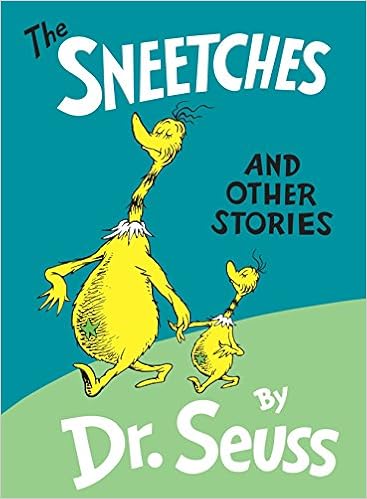
Image result for the sneetches

One resource I like to use to teach race is the book The Sneetches by Dr.Suess.  The book is about a rift between star bellied Sneetches and Sneetches without “stars upon thars.”  The book emphasizes that our outward appearances do not make one person better than another.  I like to start a discussion about race with this book because it draws attention to the fact that all people deserve to be treated with kindness and respect. 

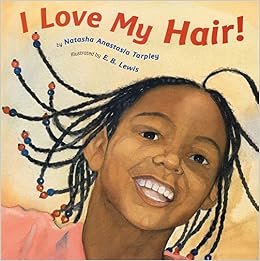
Following The Sneetches, I then like to introduce books that celebrate the uniqueness of different races.  Yes all races are equally beautiful, but there are individual things to be celebrated about each.  This leads to sharing books such as: The Name Jar by Yangsook Choi, I Love My Hair! by Natasha Tarpley, and Too Many Tamales by Gary Soto.   Each of these books celebrates a different culture and draws attention to unique characteristics of each. 

Image result for I Love My Hair!Another valuable resource for teaching about race in the classroom is Teaching Tolerance.  Teaching Tolerance provides lesson plans that will help children of different ages discuss race (and other social justice issues) in the classroom.  Teaching Tolerance provides resources for discussing current race issues in the classroom; this includes the Black Lives Matter movement, Police Brutality discussions, and lessons on white privilege.  As teachers it is our job to engage students in the conversation and give them a platform to respectfully share their thoughts. Teaching Tolerance also shares a guide called “Let’s Talk,” this guide instructs teachers in how to appropriately address and discuss race, racism and other difficult concepts with children in a safe and positive way that promotes future social change.

Image result for lets talk teaching tolerance By beginning with books and allowing children to see the beauty in different races, we allow them to analyze their own culture and find what is beautiful to them about their own race.  By reading The Sneetches, we tell children that each of them are important, despite how society may make them feel at times.  Each of the resources I have shared have been something I have utilized in my classroom and have found to be successful means for discussing race, but I must share that these resources will be of no help if the classroom has not been deemed a safe space for children.  These meaningful conversations and deep discussions surrounding literature of quality happen in classrooms that have developed a safe classroom community in which each voice is valued.

References:
The Purdue OWL Family of Sites. The Writing Lab and OWL at Purdue and Purdue U, 2008, owl.english.purdue.edu/owl. Accessed 23 Apr. 2008.
Choi, Yangsook. The Name Jar. Zaner-Bloser, 2013.
Seuss, Dr. The Sneetches: and Other Stories. Collins, 1998
Soto, Gary. Too Many Tamales. Paw Prints, 2011.
Tarpley, Natasha, and Earl B. Lewis. I Love My Hair! Little, Brown, 1998.
Teaching Tolerance. “Let’s Talk”. https://www.tolerance.org/magazine/publications/lets-talk.  Accessed 13 July 2018.
Teaching Tolerance: Race & Ethinicity.  Teaching Tolerance, 2018, https://www.tolerance.org/topics/race-ethnicity. Accessed 13 July 2018.


Identity and Issues Blog Post: Immigration and Refugees


Inside Out and Back Again by Thanhha Lai:


Inside Out and Back Again is a historical fiction book written in free verse based loosely on the author’s life as a refugee from Vietnam. Hà, the protagonist, along with her mother and three brothers, eventually ends up in Alabama after an escape from Saigon by ship.  

Lai’s work won a Newberry Honor Award in 2012.  Based on Kiefer and Tyson’s criteria, it is both a quality piece of historical fiction and poetry.  It is an authentic piece, true to the time period, because it is based on Lai’s experiences.  In the afterward, Lai explicitly delineates fact from fiction.  It shows genuine cultural values and experiences of Vietnamese refugees in the U.S.  The stylistic nature of the free verse work creates meaning; Lai explains that she chose free voice to represent the emotions that a 10-year-old would be experiencing.  The poetry creates sensory images, sparks imagination, and understandable to a young reader.

Although set in the 1970s, Inside Out and Back Again addresses multiple challenging/controversial issues faced by youth today, such as bullying, prejudice, poverty, religious intolerance, and loss of loved ones.
 
Primarily, Inside Out and Back Again shows the struggles of being a refugee in a new country and can help students better understand social injustices directed at refugees and immigrants and their day-to-day challenges, like learning a new language and adapting to a culture radically different than one’s own.

Educators should consider utilizing Inside Out and Back Again for students aged 8-10 (3rd to 5th grade), according to the Association for Library Service to Children http://www.ala.org/alsc/ncb_2012. According to the UN Refugee Agency, forced displacement is rapidly increasing and schools world-wide have increased numbers of refugees. Stories of refugees are often headlines in the news, thus students need to learn about peers seeking asylum from other countries and how they and their teachers can help support their transitions.  The UN Refugee Agency has references for teachers without training as well as teaching materials http://www.unhcr.org/en-us/teaching-about-refugees.html. The Refugee Center Online has resources for refugees, teaching materials, as well as specific approaches based on student’s culture of origin https://therefugeecenter.org/.

Inside Out and Back Again shows one family’s trials as they adapt to new surroundings.  It is an exceptional resource because it shows hardships faced in the past and when taught in conjunction with tools such as those listed above, it allows students to connect events in history to current events and personal interactions. 
Inside Out and Back Again would be excellent for use in an integrated language arts and social studies unit with lessons focusing on elements of poetry, history, current events, tolerance, and cultural diversity.

NC 5th grade SS Standards/Objectives:

5.G.1.4 Exemplify immigration to the United States in order to identify push and pull factors.
5.C.1 Understand how increased diversity resulted from migration, settlement patterns and economic development in the United States.

NC 5th grade ELA Objectives:
RL.5.2 Determine a theme of a poem from details in the text, including how characters in a story or how the speaker in a poem reflects upon a topic.
RL.5.5 Explain how stanzas provide the overall structure of a particular poem.

* Some picture books regarding immigration/refugees for younger readers
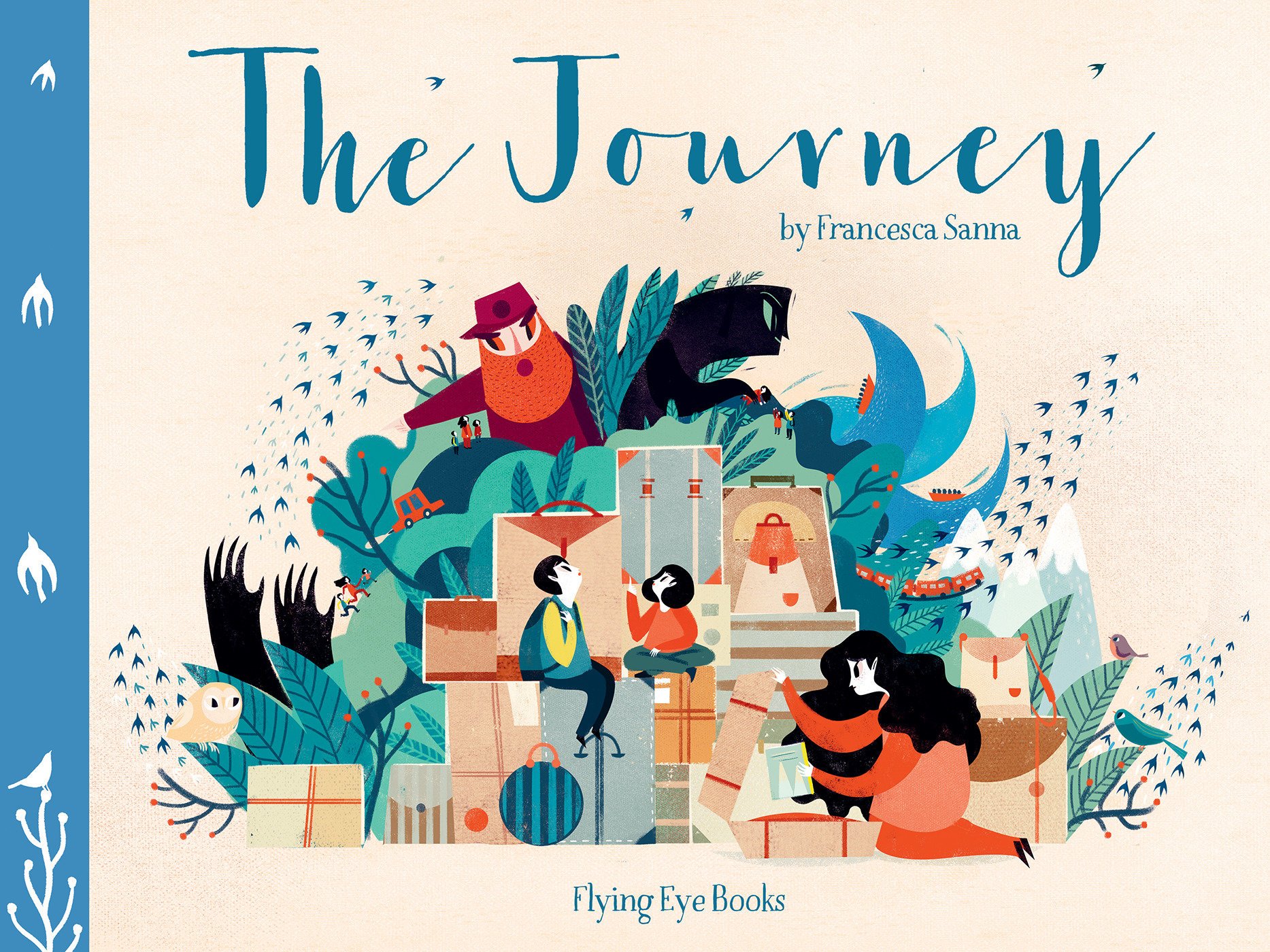
                1. Francesca Sanna’s The Journey
                2. Margaret Ruur’s Stepping Stones: A Refugee’s Family’s Journey

Citations:
Association for Library Service for Children. (2012). 2012 Notable Children's Books list. Retrieved July 14, 2018, from http://www.ala.org/alsc/ncb_2012
Kiefer, B. Z. & Tyson, C. A. (2014). Charlotte Huck’s children’s literature: a brief guide (2nd ed.). New York, NY: McGraw-Hill.
Lai, T. (2011). Inside Out and Back Again. New York, NY: HarperCollins Publishers.
Ruurs, M. & Ali Badar, N. (Illustrator). (2016). Stepping Stones: A Refugee's Family's Journey (F. Raheem, Trans.). Olympia, WA: Orca Book.
Sanna, F. (2016). The Journey. London, ENG: Flying Eye Books.
The Refugee Center Online: A free website to help refugees & immigrants. (2018). Retrieved July 12, 2018 from https://therefugeecenter.org/
United Nations. (n.d.). Teaching about refugees. Retrieved July 14, 2018, from http://www.unhcr.org/en-us/teaching-about-refugees.html

Issues & Identity Blog Post: Bullying


Bullying in today’s society is still very prevalent. According to stopbulling.gov, 49% of children in grades 4-12 reported being bullied by other students at school at least once a month. It happens every day. It happens whether we see it or not and as educators, it is our job to try to prevent it. Exploring controversial issues such as bullying, with the help of children’s literature, can provide students with the support and knowledge they need in order to offer guidance and empathy to peers.

Teaching controversial issues allows for content across the curriculum to be related in authentic ways to children’s lives, providing an opportunity for children and teachers to reflect, analyze, and critically comprehend more deeply (Kiefer 2014). Books can play an important part in anti-bullying efforts. Children can find solace by connecting to the characters in a book and can truly make a difference in the way children view themselves, as well as others (Cox). With bullying being a frequent topic of conversation between educators, administrators and parents, it should be addressed with students at every grade level. According to Teach Hub, teachers can use books to facilitate meaningful conversations that will help students develop a greater understanding of what being bullied feels like. Children’s literature is a great way for students to open up the floor for discussion of bullying in the classroom.

An educator should choose to address this issue head on to prevent this behavior from occurring during the school year. Because it’s highly prevalent within the school system, it can have serious detrimental effects on a student. Children who are bullied can develop physical and mental health issues that can lead to depression, anxiety, and decreased academic achievement. Helping to establish a supportive and safe school climate where all students are accepted and knowing how to respond when bullying happens are key to making sure all students are able to learn and grow (stopbulling.gov). Children come to school to grow in knowledge and to make friends. In today’s society, school has become a cruel place for many children, so, for an educator to address this, is making for a happier, healthier classroom environment.

Goggles! by Ezra Jack Keats is a great step in the right direction for discussing the issues of what bullying is, how to identify it and how being smarter leads to solving the problem. In this book, Archie and his friend Peter, find a pair of old discarded motorcycle goggles in a place where they’re exploring. On their venture home, they’re confronted by a group of boys who demand to have them. After being physically hit and pushed to the ground, the boys defy the bullies by leading them astray, using their brains instead of their fists. Teachers can address the topic of bullying to students by educating on what bullying is and creating a T-chart of what being a good friend is and what it is to not, having the class participate in providing ideas for both sides.

 Image result for goggles! by ezra


 References

Cox, J. (n.d.). Using Children's Literature as Anti-Bullying Material. Retrieved July 13, 2018, from http://www.teachhub.com/using-children’s-literature-anti-bullying-material

Facts About Bullying. (2017, September 28). Retrieved July 13, 2018, from https://www.stopbullying.gov/media/facts/index.html

Kiefer, B. Z., Tyson, C. A., & Huck, C. S. (2014). Charlotte Hucks children’s literature: A brief guide. New York: McGraw-Hill.


Saturday, July 14, 2018

El Deafo Summary- Group 1


El Deafo by Cece Bell, was an interesting and creatively written book. It tackled the challenging issue of disabilities. The themes in the book include acceptance, friendship, and that differences can become your superpowers. When Cece was only four years old she goes deaf after contracting meningitis. At first Cece doesn’t really notice but eventually she realizes she is different from everyone else. When Cece starts kindergarten she is placed in a class among other deaf children, which makes her feel comfortable. She learns to read, write and how to lip-read. When kindergarten is over, Cece and her family move and she has to start at a new school. The new school doesn’t have a class for hearing disabilities like her old school so Cece is forced to wear a large aid called Phonic Ear strapped to her chest. This really makes her feel different. But Cece quickly learns that the Phonic Ear isn’t all bad. It allows her to hear her teacher where ever she is in the building; on the other side of the classroom, in the hallway, in the teacher’s lounge, and even in the bathroom. Cece realizes that she has powers and uses it to her advantage creating an alter ego, a superhero named El Deafo. Its clear that even though she created El Deafo she still felt lonely and different, but she eventually discovers that by sharing her superpowers she began to make friends. Cece uses El Deafo to help her conquer her challenges and finding what she really wants, a true friend.

Bell, C. (2014). El Deafo. New York: Amulet Books.